
Getting into Magic: The Gathering for the first time can feel like staring up at a mountain. This is a card game with more than 30 years of history behind it, which means decades of mechanics, settings, characters, and strategy layered on top of each other. For newcomers, that kind of legacy can be intimidating before you even shuffle a deck.
That’s also why Wizards of the Coast’s Universes Beyond line has become such a useful gateway. Instead of asking new players to learn Magic through its long-running original lore, these crossover sets offer a familiar way in. If you already care about a world like Final Fantasy, The Lord of the Rings, or Avatar: The Last Airbender, there’s a better chance the cards will click quickly. Now that same idea arrives for superhero fans with Marvel Super Heroes.
Magic still isn’t a game you master overnight. Even a more approachable set can include cards that send new players searching for rulings or asking a more experienced friend for help. But as a self-contained starting point, Marvel Super Heroes does a lot right, especially if your attachment to the Marvel universe is what’s pulling you toward MTG in the first place.
Why Marvel Super Heroes Works as a Starting Point
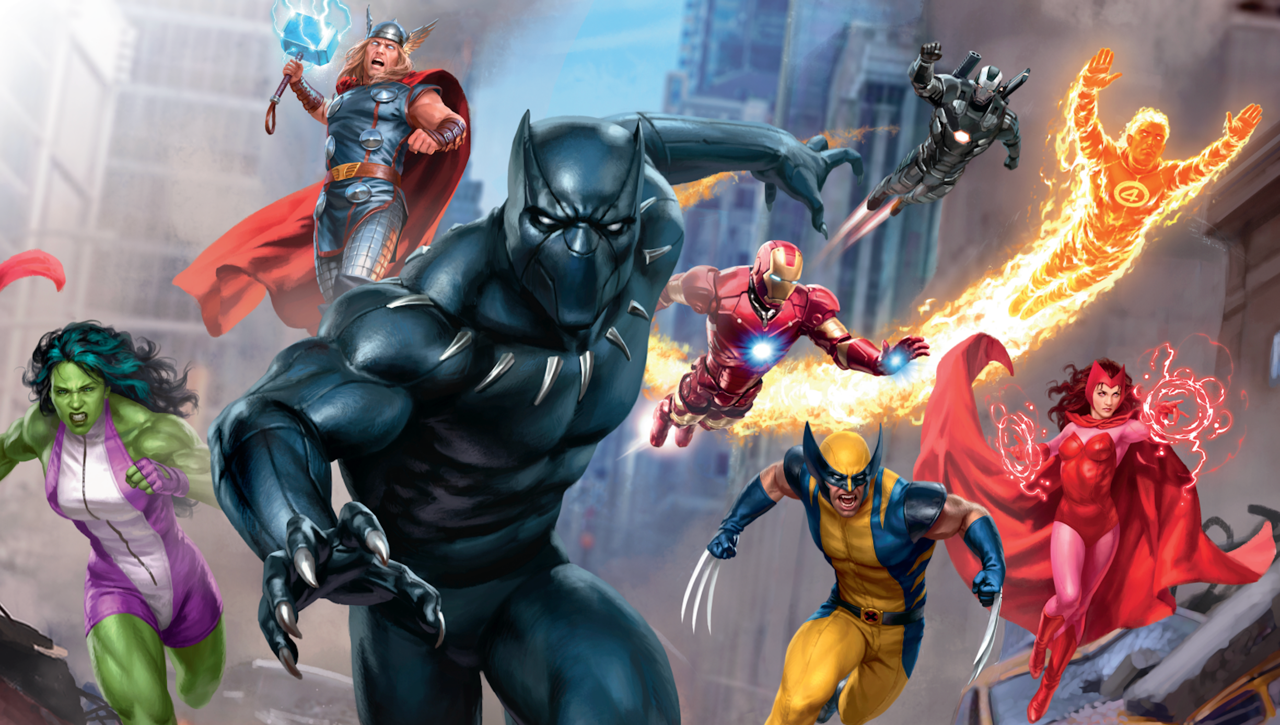
This set leans hard into recognizable characters, and that immediately helps. You’re not learning the game through unfamiliar fantasy names or abstract mechanics alone; you’re seeing Iron Man, The Hulk, Captain America, Doctor Doom, Scarlet Witch, Black Widow, Daredevil, Thanos, Black Panther, Elektra, Ant-Man, Loki, Thor, Storm, Wolverine, Jessica Jones, Nick Fury, and plenty more represented as cards.
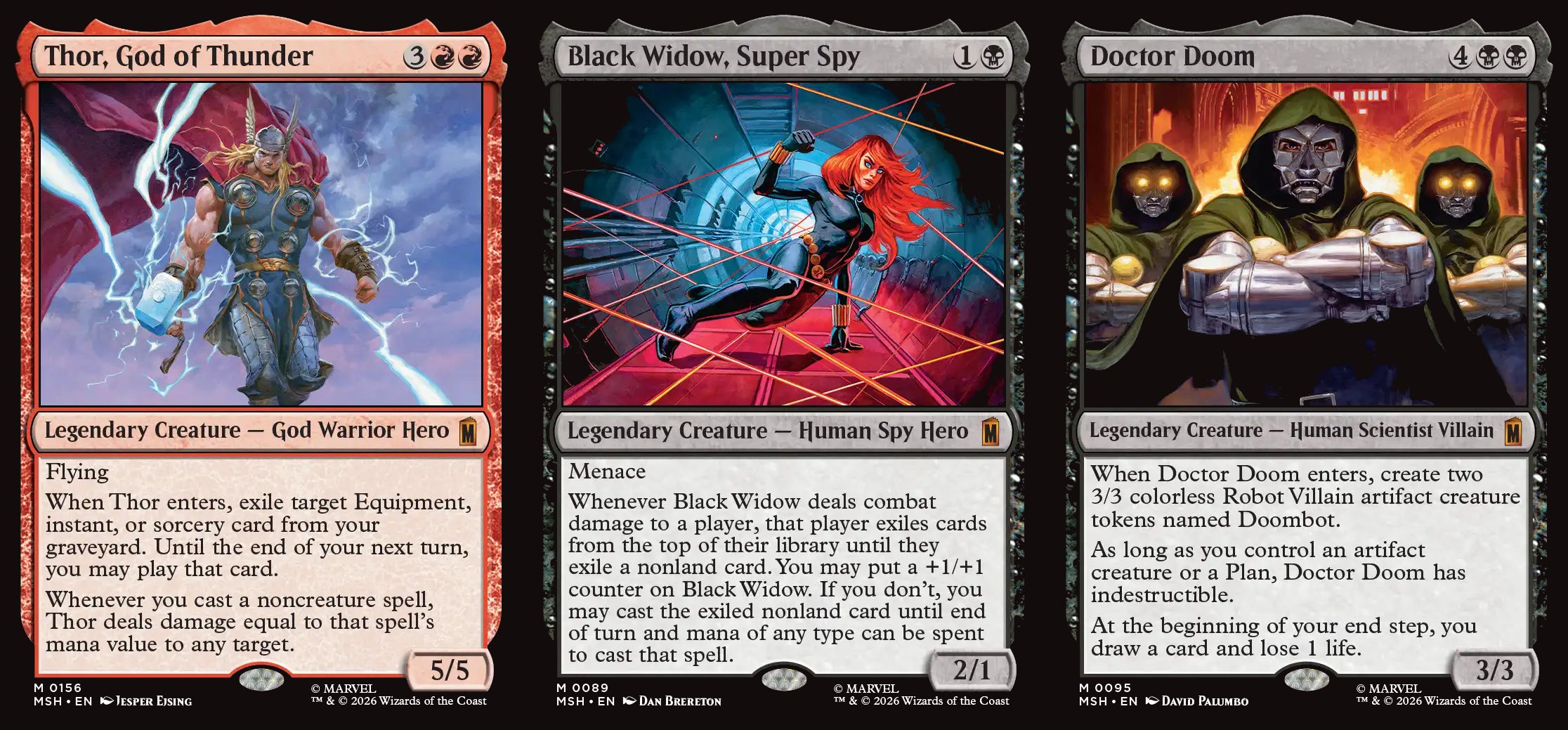
More importantly, the set’s mechanics actually feel tied to those characters. Hero and Villain creature types aren’t just labels; they create synergies that reward you for building around teams of heroes or squads of villains. The Teamwork keyword continues that idea by letting allied characters contribute to extra effects, giving the set a proper comic-book ensemble feel.
Some of the standout cards also use a once-per-game Power-up ability, which is exactly the kind of dramatic spike you’d want in a Marvel release. Thanos, the Mad Titan, for example, doesn’t just get stronger when he powers up; he can also force a brutal board clear by choosing odd or even mana values and destroying creatures that match.
Then there are the dual-faced cards, which are a particularly good fit for superhero identities. Bruce Banner can become The Hulk. Peter Parker can flip into Spider-Man. Tony Stark can turn into Iron Man at the right moment. That transformation aspect gives the cards flavor, but it also reinforces the sense that these characters are doing what fans expect them to do.
Marvel Super Heroes also gives villains room to scheme. That’s where Plans come in: effects that ask for setup over multiple turns before paying off in a big way. Doom Reigns Supreme lets you cast cards from your opponent for free, while Construct a Cosmic Cube builds toward an even more theatrical reward by helping create token creatures before eventually allowing you to control and play out your opponent’s turn.
Another villain-flavored mechanic, Connive, has you draw and then discard a card. That may sound modest, but it supports several layers of play at once: filtering your hand, fueling discard interactions, boosting creatures, and triggering effects that care about drawing an extra card.
What makes the set appealing isn’t just that it includes Marvel names. It’s that the mechanics, equipment, and card designs are often playful interpretations of the source material. Mjölnir, Hammer of Thor is a great example. It’s a powerful Legendary Artifact, but only a creature deemed “worthy” can equip it.
Yes, Captain America can wield Thor’s hammer. So can Agent Phil Coulson.
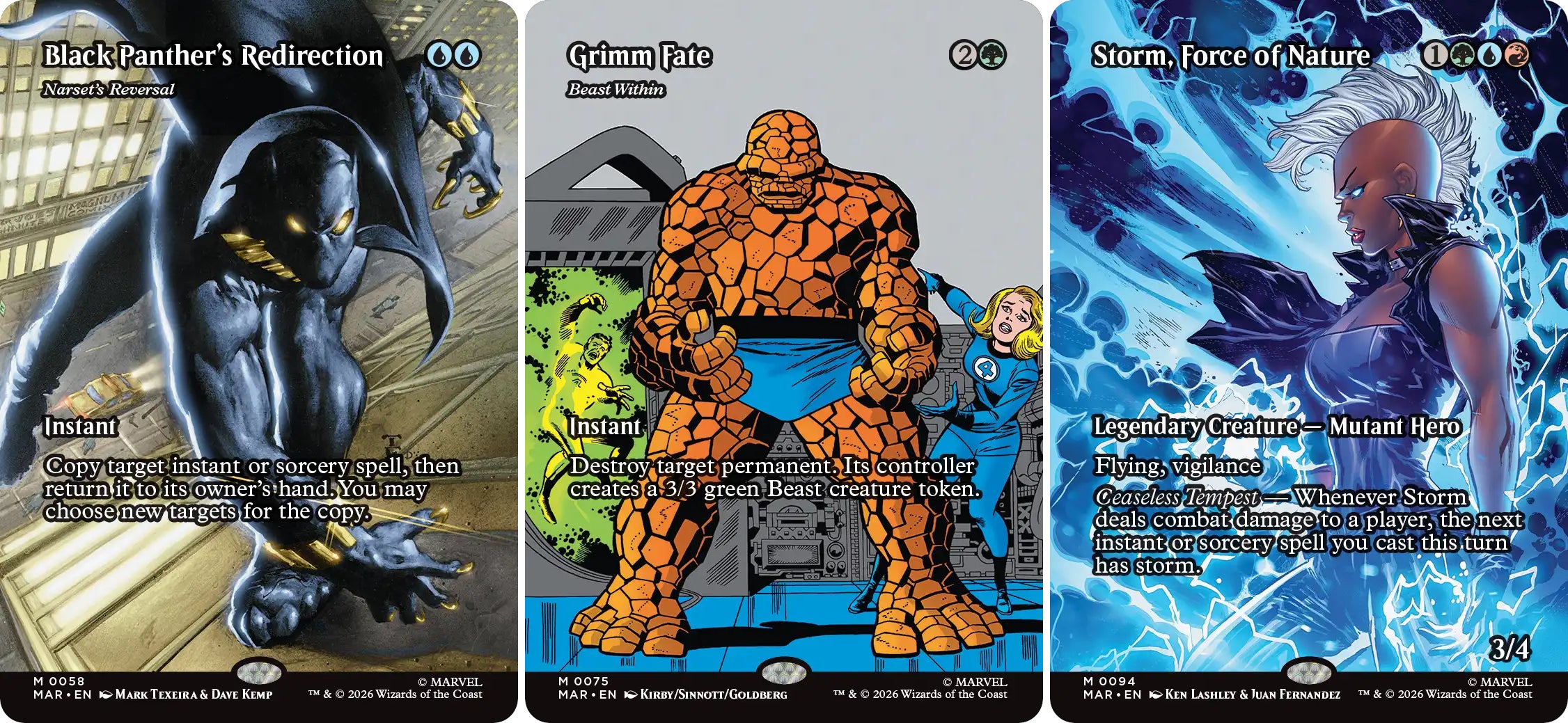
The presentation helps too. Marvel fans who enjoy collectible card art should find plenty to like here, especially in the alternate treatments. The source-material variants are particularly striking, whether they’re framed like comic covers, spread across multi-panel scenes, or shown in clean borderless versions.
Still, if your goal is to learn Magic rather than immediately dive into collecting, the smartest move is to separate those two impulses. Fancy variants and booster packs are tempting, but they’re not the easiest way to understand how the game actually works. Before spending heavily on random packs, it makes far more sense to learn turn structure, color identity, archetypes, and basic deck-building principles.
The Best Ways for New Players to Begin
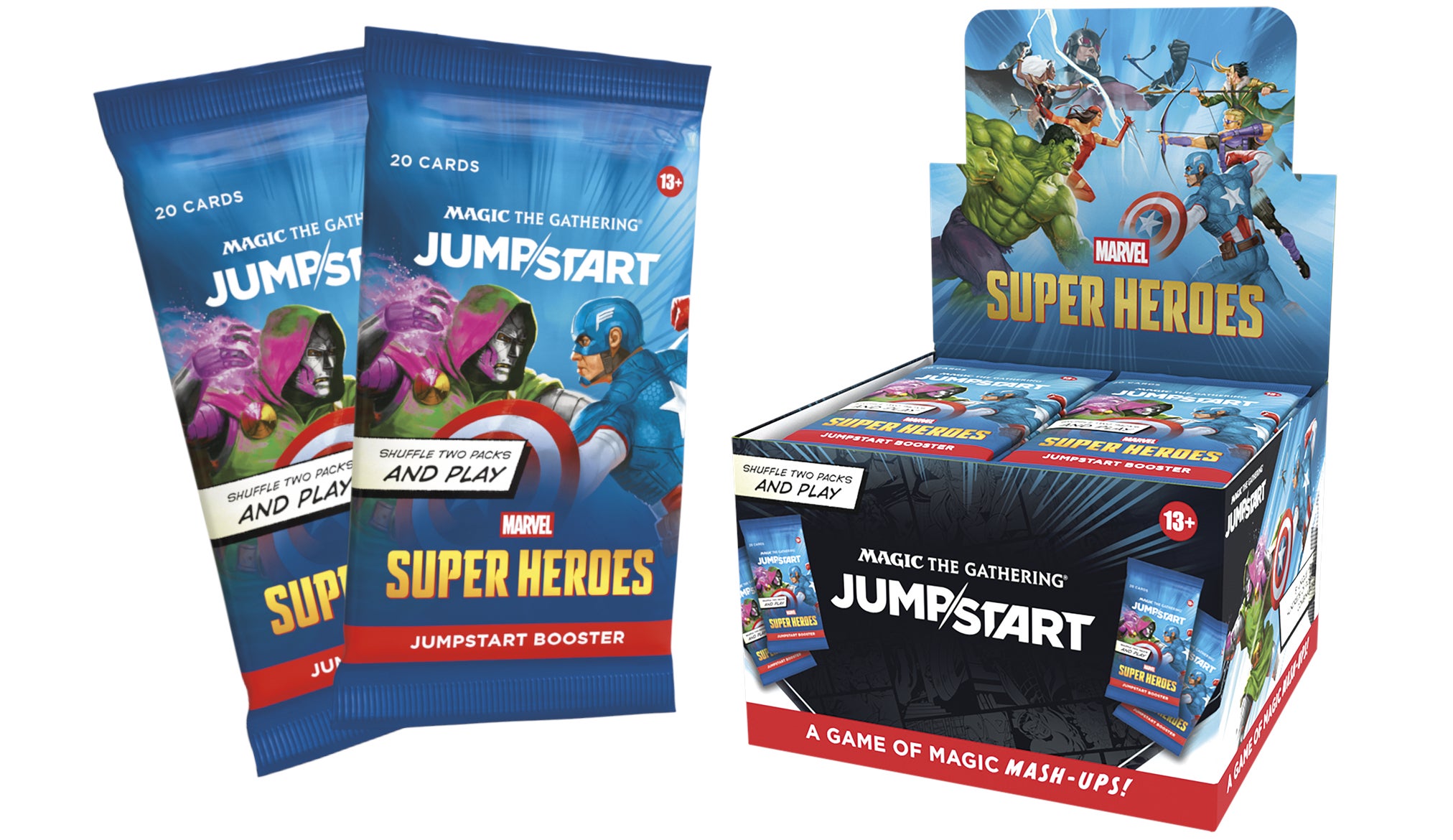
For a low-pressure introduction, Jumpstart is one of the easiest entry points. The format is simple: open two Jumpstart boosters, combine them, and you have a ready-to-play deck. It removes a lot of the friction that normally comes with building from scratch, and if you’re learning with someone else doing the same thing, the decks should land in a reasonably similar power range.
That said, Jumpstart isn’t a complete tutorial. It gets you into games quickly, but truly brand-new players will probably still need some outside help to understand timing, keywords, and interactions.
If you’re starting from absolute zero, the Beginner Box looks like the better first stop. It includes eight Jumpstart half-decks, but the real value is in the two guided tutorial decks. Those walk players through the basics step by step, introducing turn flow, key mechanics, and the kind of combat decisions Magic asks you to make. The included playmats also help by physically showing where cards go, and the rules reference guide is useful when an unfamiliar keyword shows up.
After that tutorial phase, Jumpstart becomes a nice sandbox for experimenting. You can try different color pairings, get a feel for broad strategies, and start to notice what kinds of cards and play patterns you enjoy most. The article notes that there are 51 different Jumpstart booster themes, and while some are naturally stronger than others, the format remains an approachable shallow-end version of the game. Once a particular mix clicks, you can always use that as a foundation to customize later.
Once you’ve got the basics down, Commander is another beginner-friendly route, especially if you like social multiplayer games. Commander decks use 100 cards, with no duplicates beyond basic lands, and every deck is built around a designated commander that starts outside the deck and can be cast from its own zone. If it gets removed, you can bring it back again for an increased cost. It’s one of Magic’s most distinctive formats, and it gives your deck a clear identity from the outset.
Marvel Super Heroes includes four preconstructed Commander decks, each built around a different theme. Avengers Assemble is a red, white, and blue list led by either Captain America or Nick Fury. Captain America boosts himself and other heroes as they enter the battlefield and helps them get active immediately, while Nick Fury supports a more resourceful game plan by making hero spells cheaper and helping you find more hero cards.
The Fantastic Four deck is flexible in a different way. It uses four colors and lets you choose any member of the Fantastic Four as your commander. They share the same basic activation requirement for their signature ability, but the actual effects differ, giving the deck several possible play styles depending on who you want leading the team.
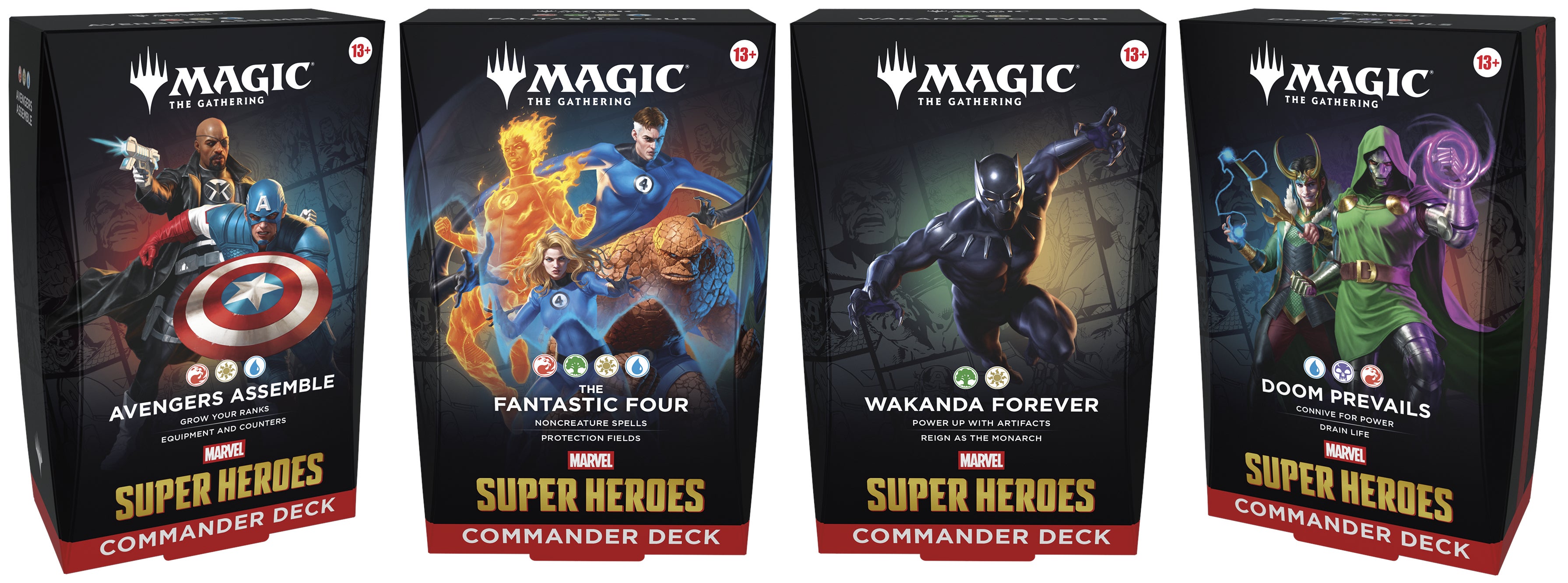
Commander’s biggest strength is that it tends to prioritize fun and table dynamics over pure optimization, especially in casual groups. It also supports more players than a standard one-on-one match. While it can technically go up to six, three or four is usually the sweet spot, since multiplayer games open up politics, temporary alliances, and target selection in a way that feels very different from duels.
The catch is cost. The preconstructed Commander decks are notably more expensive than the simpler beginner products, with the original article citing them at around AUD $140 each. By comparison, the Beginner Box is listed closer to AUD $65, and individual Jumpstart boosters are AUD $12.95 each, with two needed to make a deck.
So, Is It a Good Marvel-to-Magic Onramp?
Yes. For Marvel fans who have been curious about Magic: The Gathering but put off by its age and scale, Marvel Super Heroes looks like one of the more welcoming crossover sets Wizards has made. It offers recognizable faces, mechanics that reflect the fiction, and a few clear paths for learning depending on how comfortable you are with card games.
The best approach is probably to ignore the collector mindset at first and focus on learning to play. Start with the Beginner Box if you want the clearest guided introduction, move to Jumpstart if you want quick and casual games, and consider Commander precons once the fundamentals start to make sense.
That’s the enduring trick of Magic: underneath all the complexity, it remains a game with almost endless replay value, whether you’re meeting friends at home or dropping into a local event. And for Marvel fans, this may not be the end of the crossover story either. Unlike many one-off Universes Beyond releases, Marvel has already had last year’s Spider-Man set, which introduced The Soul Stone, while Marvel Super Heroes includes The Mind Stone.
Marvel Super Heroes is out now, and you can learn more here.